
There was a time not long ago when we were running our own business, doing our best to stay afloat and provide for our family. Then everything changed.
Our business equipment was stolen, and with it went our ability to earn a living. Around the same time, my husband’s health began to decline, making physical work almost impossible. We found ourselves in a situation we never expected – launching a GoFundMe just to stay afloat and turning to food pantries to help feed our family.
We were grateful. But we also realized quickly that while many people give with generous hearts, there’s a real disconnect between what gets donated and what families like ours truly need.
We Got Hamburger Helper – but No Hamburger or Milk
We received several boxes of Hamburger Helper. It’s a thoughtful item if you have the meat and milk to make it. But we didn’t. Ground beef was completely out of our budget, and milk wasn’t something we could rely on from the pantry. So the boxes sat unused. It’s frustrating to have meal kits that you can’t actually make.
Mac & Cheese Doesn’t Work Without the Basics
Macaroni and cheese showed up a lot, too. It’s a comfort food for many – but not without milk or butter. These basic add-ins are often missing from pantry bags, making it tough to prepare even the simplest boxed meal.
So Much Peanut Butter and Jelly – but No Bread
We’d often receive jars of peanut butter and jelly – but bread? That was rare. Without it, your options are limited. PB&J is a great meal or snack, but it needs something to go on. Crackers, tortillas, even pita bread would’ve made a huge difference.
Navigating Food Pantries with Diabetes
One of the hardest things we faced was trying to find food that was safe for my husband to eat. He has diabetes, and food pantries, understandably, aren’t always able to cater to specific dietary needs. But the result? Bag after bag filled with high-carb, sugary items he couldn’t eat – white rice, sugary cereals, pasta, and processed snacks.
We did our best to work around it, but it meant we had to stretch what little money we had to buy diabetic-friendly staples ourselves. Items like whole grains, unsweetened canned fruits, low-sodium vegetables, or high-protein snacks were almost never included. For families managing diabetes, heart conditions, or food allergies, this adds another layer of stress to an already tough situation.
Don’t Forget the Pets: A Hidden Struggle
One thing we didn’t expect to struggle with during our hardest times was feeding our pets. Our cats and dogs are part of our family. They gave us comfort during all the stress and uncertainty – but we had an incredibly hard time finding help when it came to pet food.
Food pantries are focused on feeding people, which is completely understandable. But that meant we had to make some really tough choices – cutting back on what little we had just to keep our pets from going hungry.
If you’re thinking of donating, pet food is something many families silently hope for but rarely receive.
Pet items that make a difference:
✅ Dry or canned cat and dog food (any size, unopened)
✅ Litter for cats
✅ Small treats or chews
✅ Pet shampoo or flea combs
✅ Small bags or portion-sized pet food (easier to distribute)
A little goes a long way, and it can mean the world to a family who just wants to keep their furry family members safe and fed.
If You Want to Help, Here’s What Families Really Need
If you’re considering donating to your local food pantry, here are items we personally found incredibly helpful, and often in short supply:
✅ Canned proteins (tuna, chicken, beans, Vienna sausages, SPAM)
✅ Shelf-stable milk or powdered milk
✅ Meal kits that don’t require fresh ingredients
✅ Cooking oil, butter alternatives, or spices
✅ Crackers, tortillas, or shelf-stable bread
✅ Personal hygiene items (soap, toothpaste, deodorant)
✅ Feminine hygiene products
✅ Toilet paper and paper towels
✅ Baby formula, baby food, diapers
✅ Diabetic-friendly or low-sugar options (unsweetened oatmeal, low-carb snacks, canned veggies, etc.)
✅ Pet food and supplies (dry or canned cat and dog food, cat litter, treats, basic care items)
Pet food and care items are often forgotten but desperately needed. Families shouldn’t have to choose between feeding themselves and feeding their pets. A small donation for a furry friend can bring enormous relief and comfort to someone going through a tough time.
Giving with Heart and Insight
We will always be grateful for the help we received when we needed it most. Food pantries gave us a safety net during one of the most difficult chapters of our lives. That generosity is something we’ll never forget.
But our experience also opened our eyes to the reality of food insecurity: it’s not just about having food- it’s about having food you can actually eat, safely and with dignity.
If you’re in a position to give, thank you. And if you’re unsure what to donate, let this be a guide straight from a family who’s been there. Your kindness, paired with a little insight, can make all the difference.
Thoughtful Giving Starts with Understanding Real Needs
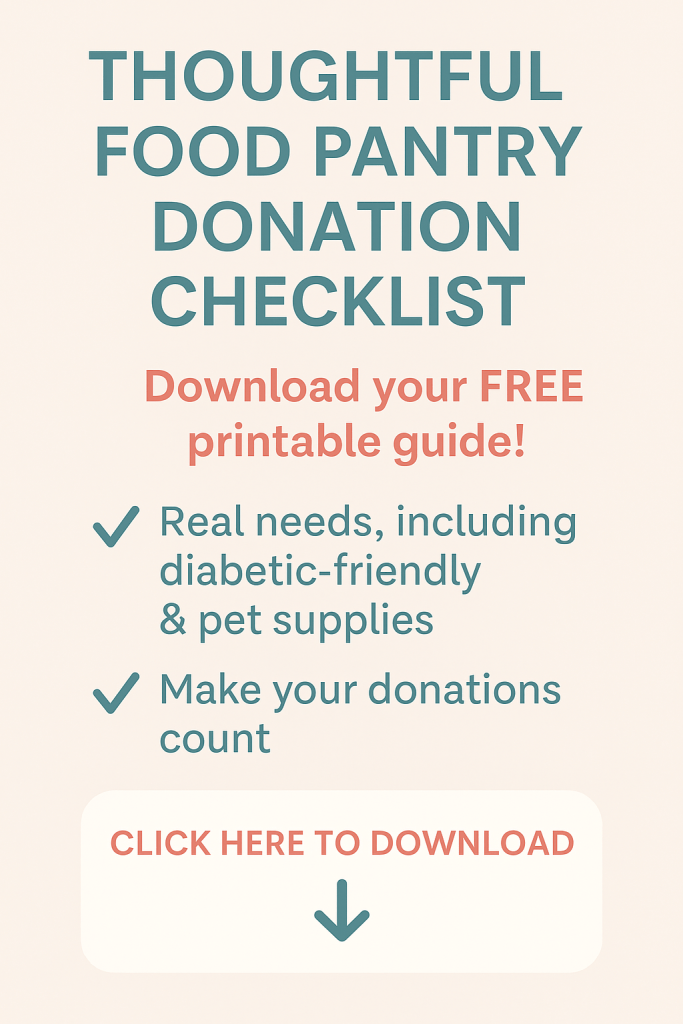
If you’ve ever wondered what to donate to a food pantry, or how to make your contribution truly helpful, this checklist is for you.
Based on our personal experience navigating food insecurity, this printable donation guide goes beyond the usual items. It includes diabetic-friendly options, often-overlooked essentials like cooking basics and hygiene products, and even a section for pets – because yes, families in need still have beloved cats and dogs to care for.
Whether you’re donating a little or a lot, this checklist will help ensure your kindness meets someone else’s real needs.
Click below to download the printable:
Helpful Resources
Whether you’re looking to donate, get help, or learn more, these trusted resources can guide you:
- Feeding America – Find Your Local Food Bank (Quickly locate a food pantry in your area to donate or receive assistance.)
- Pet Food Pantry Directory – Humane Society (Find programs that offer pet food and supplies to families in need.)
- What Can I Eat? – American Diabetes Association (Learn about safe, healthy food options for those managing diabetes.)
- GuideStar – Research Nonprofits Before You Give (Vet food pantries and charities to ensure your donations are going to legitimate, impactful organizations.)


 Daily Deals from a Nerd Mom
Leave a Reply